Basements · Colorado
Basement epoxy floors in Colorado: what to know before you coat
· 5 min read
By Iron Cross Coatings · Fort Collins, CO
Moisture, radon pipes, cracks and comfort: what to check before a coating goes down on a Colorado basement slab, which system fits which room, and what 600 sq ft actually costs.
In this guide
- 01Why basements are a good fit for a coated floor
- 02Moisture comes first, so test before you coat
- 03What happens if the slab shows moisture
- 04Radon systems, sump pits and floor drains
- 05Prep: diamond grinding, old flooring and cracks
- 06Flake, metallic or solid: which one for which room
- 07Comfort: it's still a hard floor
- 08What a basement floor costs: a 600 sq ft example
- 09What moves a basement price
- 10Before you call
01
Why basements are a good fit for a coated floor
A basement is already sitting on concrete. There's no subfloor to tear out and no wood to worry about, so a coating bonds straight to the slab you have. Done right, that turns a cold, dusty floor into one that's bright, seamless and easy to clean, without carpet holding onto dampness and odors.
We coat rec rooms, home gyms, basement bars and theaters, laundry and storage areas across Northern Colorado and the Denver metro. The prep and the questions are the same in almost every one of them, and most of them come down to what's going on underneath the slab. Here's what to know before you call anyone.
02
Moisture comes first, so test before you coat
Concrete below grade is in contact with the soil, and soil holds moisture. That moisture moves up through the slab as vapor, even in a basement that never floods. A coating seals the top of the slab, so if enough vapor is pushing up underneath, it can lift the coating off in blisters or bubbles. Moisture is the number one reason basement coatings fail, and it's why the slab should be checked before anything goes down.
Some warning signs you can spot yourself:
- White, chalky powder (efflorescence) on the slab or the bottom of the foundation walls.
- Dark patches that come and go, especially after rain or snowmelt.
- Old tile, carpet glue or floor paint that's lifting, bubbling or turning powdery.
- A musty smell that doesn't go away with a dehumidifier.
- A simple check: tape a square of clear plastic tightly to the floor for a day or two. Droplets or a dark spot under it point to moisture coming up.
03
What happens if the slab shows moisture
Finding moisture doesn't automatically rule out a coated floor. Sometimes the fix is outside: gutters that dump next to the foundation, downspouts without extensions, or grading that slopes toward the house. Those are worth fixing no matter what floor you put down. There are also primers built for slabs with elevated moisture, and whether one makes sense depends on what the slab shows.
We look for moisture at the free walkthrough and recommend an approach based on what we find. If a slab isn't ready to coat, we'll tell you straight instead of selling you a floor that won't last.
04
Radon systems, sump pits and floor drains
Radon is common along the Front Range, and a lot of Colorado basements have a mitigation system: a pipe coming up out of the slab, usually with a fan and a sealed sump or suction point. A coating doesn't replace that system and shouldn't interfere with it. We coat around the pipe and leave sump lids and their seals accessible, so the system keeps working the way your mitigation contractor set it up. If you've never tested for radon, it's smart to test before you finish a basement.
Floor drains stay open and working; we coat up to them and keep them clear. Sump pits stay accessible for service. If your basement has a floating slab with a gap where it meets the walls, which is common in Colorado homes built on expansive soil, that gap is there on purpose and shouldn't be bridged.
05
Prep: diamond grinding, old flooring and cracks
Every coating we install starts with diamond grinding. Grinding opens the surface of the concrete so the coating bonds into it instead of sitting on top. In basements it also takes off what previous owners left behind: thinset from old tile, carpet glue, paint, drywall mud and tack-strip nails. Acid etching and roll-on kits skip that step, which is why they peel.
Basement slabs almost always have some cracking. Most of it is normal shrinkage. We fill cracks and pits and grind the repairs flush before anything goes down, so they don't show through as ridges. Control joints, the straight saw cuts in the slab, can be filled or kept as lines depending on the look you want and how the slab moves. We'll go over that at the walkthrough.
06
Flake, metallic or solid: which one for which room
Basements usually get one of three systems. The right pick depends on how you use the room more than anything else.
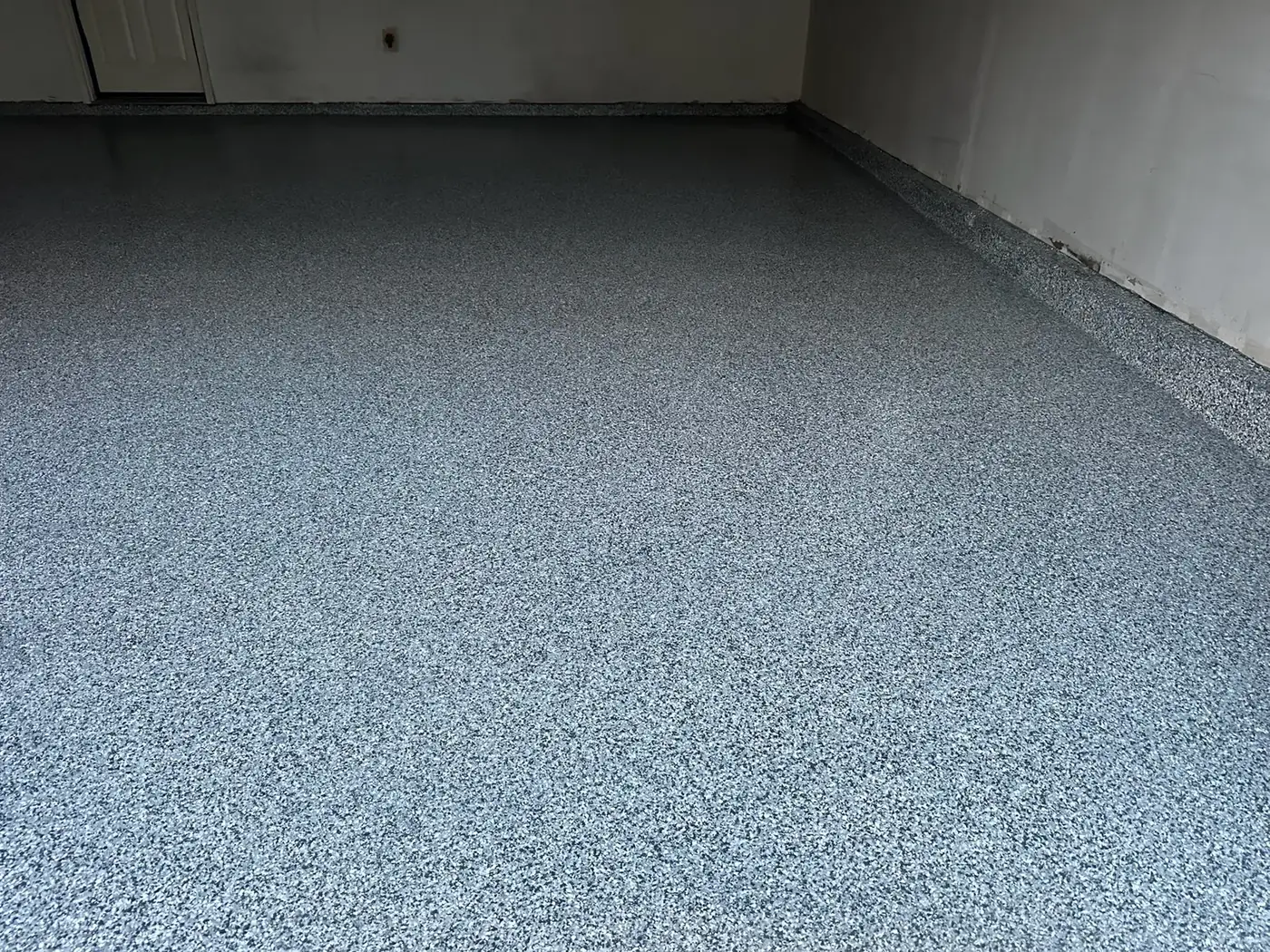
- Full-flake for rec rooms, home gyms, kids' play areas and storage. It's textured, hides wear and holds up to equipment and furniture.
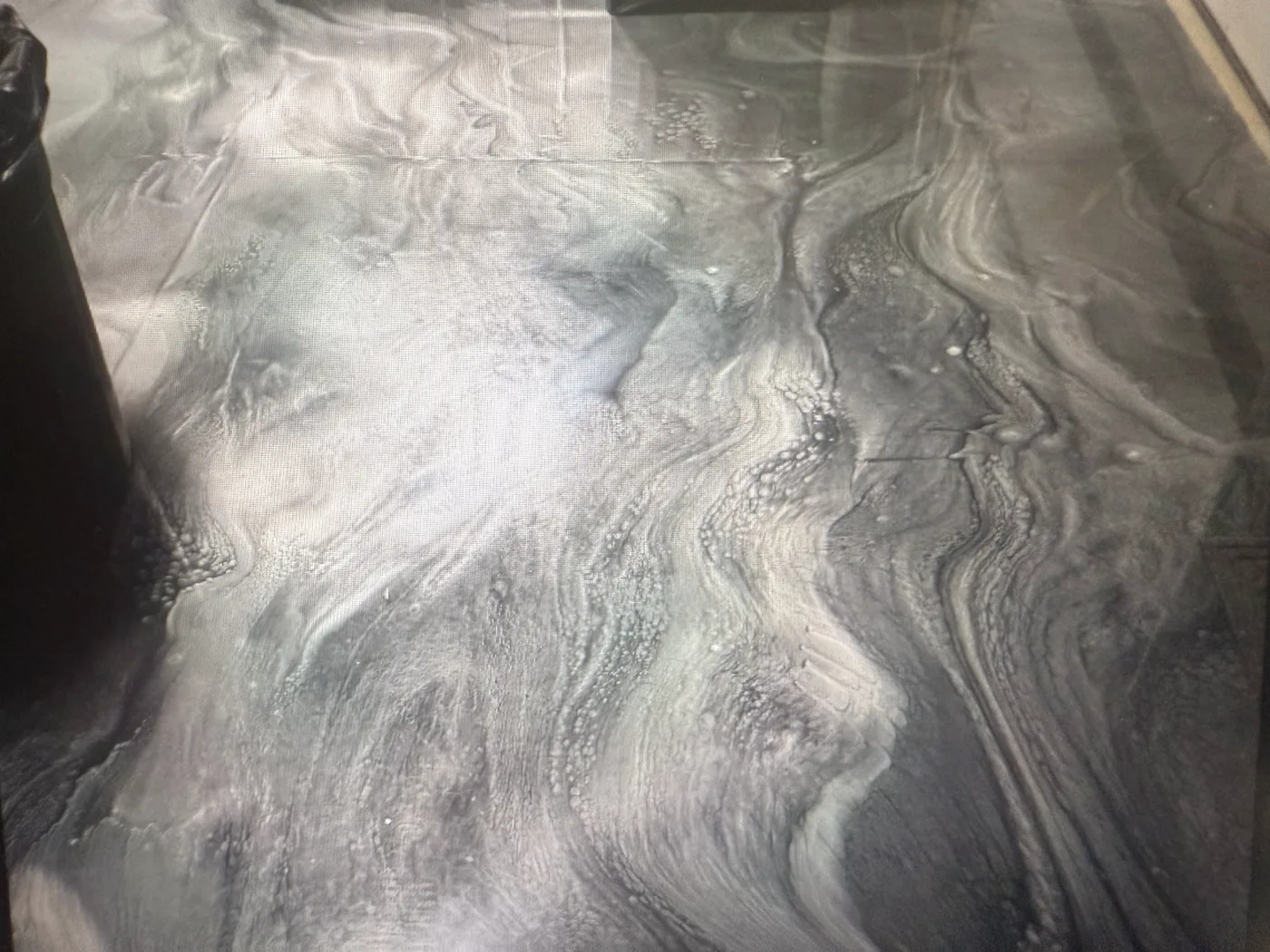
- Metallic for a basement bar, theater or living space. It's poured and worked by hand, so every floor has its own movement and depth.
- Solid color for laundry rooms, mechanical rooms and utility areas where you want clean, bright and simple.
07
Comfort: it's still a hard floor
A coated floor is a finished concrete floor, and it feels like one: hard and cooler underfoot than carpet. Most people who finish a basement with a coating use area rugs where they sit and walk barefoot, and gym mats where they lift. Use a breathable rug pad and move rugs now and then so moisture doesn't get trapped under them.
A light flake blend or a light solid color does a lot for a dark basement, bouncing what light you have around the room. For a living area, a gloss metallic reads more like a finished floor than a garage floor. Not sure what will look right? Try colors on a photo of your own basement in the floor visualizer, then we bring real samples to the walkthrough.
08
What a basement floor costs: a 600 sq ft example
We price by the square foot, and diamond-ground prep is built into every system. For a 600 sq ft basement, here's where each system lands with our current rates:
- Full-flake at $6.25–$6.50 per sq ft: about $3,750–$3,900.
- Solid color at $5.00–$6.00 per sq ft: about $3,000–$3,600.
- Metallic at $9.00–$12.00 per sq ft: about $5,400–$7,200.
- Grinding and repair on its own, without a coating, at $2.00–$4.00 per sq ft: about $1,200–$2,400.
09
What moves a basement price
Basements are rarely one clean rectangle. A layout with a lot of small rooms, closets and doorways means more edge work than an open rec room of the same size. Thick tile, layers of glue or an old coating that has to come off add grinding time, and so does heavy crack repair. None of that is a surprise later: we see it at the walkthrough and it's in the price we give you. The cost guide covers every system if you want to compare.
10
Before you call
Your final number comes after a free on-site look, because moisture, old flooring and heavy cracking can add work. Measure the room (length times width, then add up the rooms), note any of the moisture signs above, and think about how you'll use the space. Then plug your size into the instant estimate or call 970-599-1898.
For more on how we handle basement jobs, see our basement floors page, or read about epoxy floors in the rest of the house if you're thinking about a kitchen, mudroom or living room on a slab.